Greenhouse Gas Reduction Plan
The Greenhouse Gas Reduction Plan (GHGRP) inventories Valley Water’s GHG emissions and provides a roadmap to reduce Valley Water’s emissions and achieve carbon neutrality by 2045. This target aligns with California’s goals under Assembly Bill (AB) 1279, signed by Governor Newsom in 2022. The GHG emissions inventory establishes Valley Water’s baseline GHG emissions using a five-year average from 2017 to 2021. Using a five-year average accounts for variability in operations and imported water deliveries, which drive annual variability in emissions. The emissions baseline was then compared to two emissions forecasts: business as usual and successful implementation of legislative requirements. The forecasted GHG emissions are mitigated with numerous GHG reduction measures to make interim progress toward carbon neutrality by 2030 and to achieve carbon neutrality by 2045. The plan provides specific implementation steps as well as metrics to measure and report on progress.
The GHGRP aligns with the framework outlined under the California Environmental Quality Act (CEQA) Guidelines §15183.5. The GHGRP will function as a “CEQA-qualified” plan adopted by the Board of Directors to streamline GHG analyses and support the incorporation of reduction measures in future project-specific CEQA documents. The CEQA document for the GHGRP was shared with the public for review between May 8 and June 8, 2025, with a final draft of the Initial Study/Negative Declaration CEQA document and the GHGRP going to the Valley Water Board of Directors for adoption in August 2026.
Links:
- The Greenhouse Gas Reduction Plan One Page Summary
- The Greenhouse Gas Reduction Plan is now available (Board adopted on August 11, 2026)
- Greenhouse Gas Reduction Plan CEQA (IS/ND), CEQA Comments and Plan
- Valley Water releases Greenhouse Gas Reduction Plan for public review | Santa Clara Valley Water
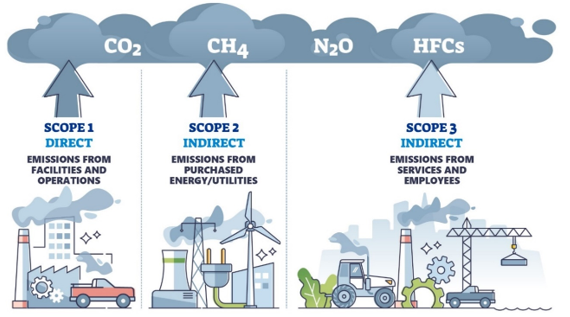
The GHGRP long term goal is carbon neutrality by 2045. Carbon neutrality is achieved, in order of priority, through a combination of reductions in carbon emissions, carbon sequestration, and carbon offset purchases. Reduction in carbon emissions is addressed on a per scope basis, with scope 1 being emissions under the reporting entity’s (i.e., Valley Water) direct control, scope 2 being emissions generated from purchased electricity, and scope 3 being from actions performed by others to support Valley Water’s work (Figure 1). Valley Water will continue to carefully track its emissions and mitigation efforts (i.e., its carbon budget) to ensure carbon neutrality is achieved by 2045 (Figure 2). As Valley Water strives to meet its carbon neutrality goal, it will manage those factors that it has direct control over, look to improved technologies and efficiencies, and support legislative action that pushes for lower carbon emissions and increases funding to support and address climate change.
Figure 1. Scope Emissions
GHGRP Scope Components*:
- Scope 1: On-road fleet (7%), natural gas use in buildings, off-road fleet, high GWP gasses
- Scope 2: Facility electricity
- Scope 3: Construction (45%), imported water (26%), employee commute, solid waste, business travel, sediment hauling, wastewater
- *Top 3 emissions in the GHGRP are shown in parentheses.
Figure 2. Carbon Budget
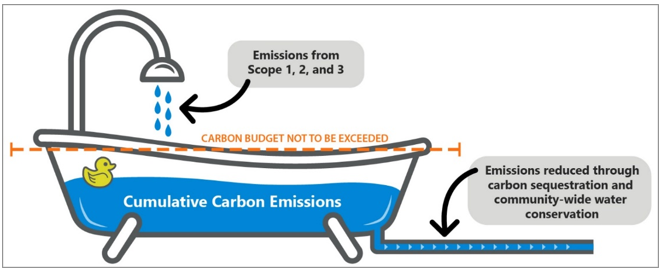
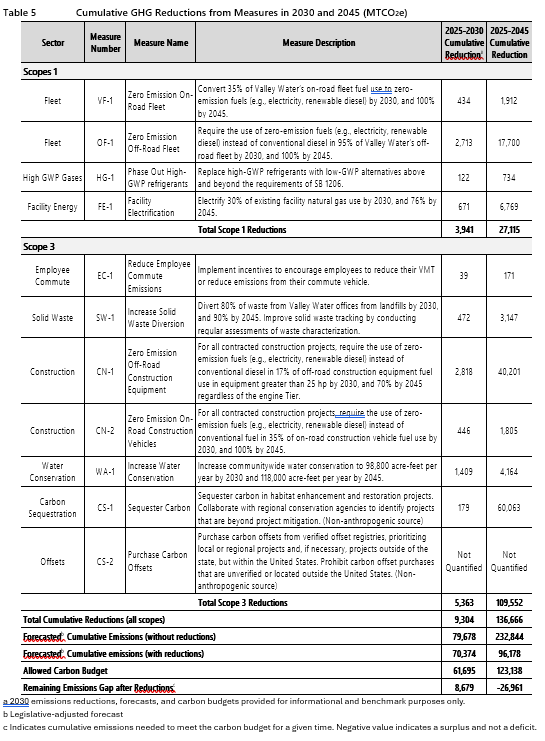
Table 5 from the GHGRP provides information on the types of emissions in Scope 1, 2, and 3, and what types of reductions are needed to meet interim goals in 2030 and long term carbon neutrality goals in 2045.